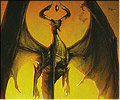


The infamous Niv-Mizzet. the Dragon Izzet League leader and founder had seen six different prints with his inception since the Ravinca plane was revealed to us.
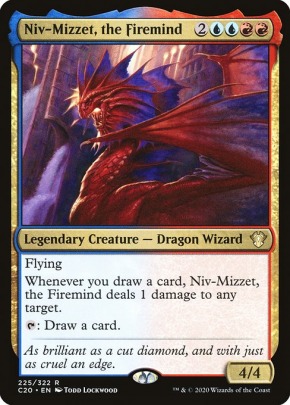

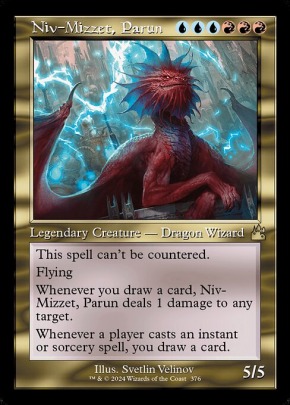
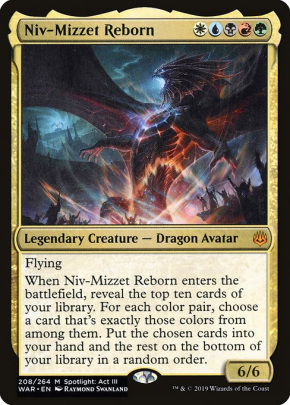
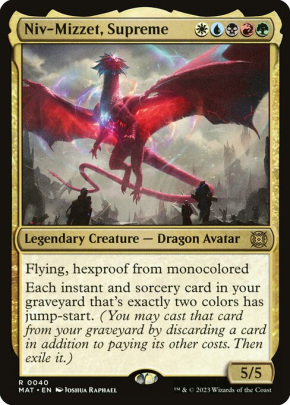

As you can see he was firmly in red and blue until the War of the Spark, where he had been killed by Nicol Bolas, but had prepared plans to resurrect himself with the aid of the rest of the guilds of Ravinca in such a case. His new incarnation possesses the Guildpact, which is an ancient magic that holds the laws of Ravinca to enforce ordinance for various aspects within each of the ten guilds.
As such he has gone from being a two-color legendary creature to a five-color legendary creature.
It's a masterful card design and really great story telling within his ability. "Color pair" specifically means that it can only be cards that have two colors, and two colors only. So you can't have a three colored card (like Nicol Bolas, the Ravager for example) being chosen, even though it contains two colors, it doesn't meet the stipulations as it has the additional color.
Niv-Mizzet Reborn is a shout out to all the guilds of Ravnica, expanding his knowledge and mastery beyond the mere domain of the Izzet League.

What can Niv-Mizzet Reborn do?
Quantity versus Quality of cards you put into hand
Because you can only choose one of each color-pairing with Niv-Mizzet Reborn, you have an incentive to try and distribute your color-pairings as evenly as possible. Now if you don't then you get more card selection within a color-pairing, but not quantity of cards in hand.
For example you can have a deck that is purely Jeskai within your 99, so you can potentially hit Boros, Izzet and Azorius, but that means you can only get a maximum of 3 cards off his trigger.
If you are hoping to get the highest number of cards off Niv, then you want to have an even distribution of color-pairing within your deck. This has very specific design stipulations in the end.
Often you are balancing the power-level of cards against the need to spread out your colors more. Finding that balance is a constant shuffle in my experience, and honestly a lot of fun when it comes to the experience of building and playing with Niv-Mizzet Reborn as your commander.
I personally have gone for trying to maximize on quantity and quality, meaning I have tried to get the distribution as even as possible, while making sure the quality is perfectly inline for the deck strategy.
Now I do have a range between 5-8 for each color-pairing, so I have made some concessions on the quantity of cards, otherwise I'd have each guild on 7 cards even realistically. But some guilds just have a slight edge in cards that synergies within this build.
What are your chances of revealing a color-pairing?
Here is a breakdown of number of color-pairings in the deck, and your chances of revealing at least one off a Niv-Mizzet Reborn trigger. It assumes that you've had a normal distribution of draw already, i.e. you haven't drawn a big clump of particular guilds, therefore less likely to reveal those same guilds.
| Color pairing | Number in deck | Chance of reveal |
|---|---|---|
 Azorius Azorius | 7 | 54% |
 Dimir Dimir | 7 | 54% |
 Rakdos Rakdos | 7 | 54% |
 Gruul Gruul | 6 | 48% |
 Selesna Selesna | 7 | 54% |
 Orzhov Orzhov | 5 | 42% |
 Izzet Izzet | 6 | 48% |
 Boros Boros | 6 | 48% |
 Golgari Golgari | 6 | 48% |
 Simic Simic | 8 | 59% |
I'd say the most extreme deck that aimed for quantity would have around 70 color-paired cards, so you could aim for 7 of each of guild colors.
This deck has 65 color-paired cards, meaning an average number of 6.5 cards each between the guilds.
With 10 Guilds (color-pairings), you are expecting on average to put around 5 cards into your hand off his trigger.
But of course it is up to the shuffling Gods what is revealed and I have had instances of only revealing 2 color-pair and other times 8 different color-pairings. So just be prepared for variance.
What color-paired cards are good in Magic?
There are thousands of bi-color paired cards within Magic, so there are a lot of directions you can go.
I don't aim to cover them within this primer.
This is by far one of the most unique deck builds that I have created (or even seen), so the focus is explaining the design and how to leverage the mechanics that are within this deck.

Deck History
How this deck came together
Show
Hide
Bi-colored cards with cycling
During my research around Niv-Mizzet Reborn I noticed that there were a reasonable amount of bi-colored cycling cards. Especially within Alara Reborn expansion as one of it's main themes.
Because Niv-Mizzet Reborn is not going to get you lands naturally off his trigger, this has an element of being able to draw you lands. Amazing!
 But actually what got me interested in this idea was using these with Astral Slide and Astral Drift and targeting mainly Niv-Mizzet Reborn to exile to return to play for additional triggers off his ability.
If you can imagine that you get to exile Niv-Mizzet Reborn potentially every players turn once you are setup. Because you'll be looking at 10 more cards each time, your chances of drawing into other cycling cards are very high.
You can even using the ones that get lands types; Igneous Pouncer, Jhessian Zombies, Pale Recluse, Sanctum Plowbeast, Valley Rannet to get the land-type cycle lands in; Canyon Slough, Fetid Pools, Irrigated Farmland, Scattered Groves, Sheltered Thicket for even more cycling triggers.
There is almost no way you can miss drawing into further cyclers. It's just a case of having the mana available to pay for each of the cycling cards in the first place.
If you can imagine in a four player game, getting Niv-Mizzet Reborn to trigger four times for one turn round, that you will have seen 40 cards off the top your library! That's literally nearly half your deck.
What to do with all of these cards?
Well let's say in the example of getting a full turn round with an Astral Slide/Astral Drift you get to put 30% of those cards into your hand, a low estimate given an example of a poor outcome.
That's still about 12 cards in hand, with a selection of almost half your deck. What would be the best cards in this situation?
Hypothetical methods of getting cards into play from hand
"Cheating" cards into play, how this deck works
I've mentioned two quite unusual cards in Living End and Hypergenesis within this hypothetical framework, and really these are the inspiration and key cards behind this deck, along with the Orzov mass reanimation cards.
Some of you might be familiar with the Modern deck simply titled "Living End", and it to uses cycling creatures to get cards into the graveyard. It has been a top-tiered deck since Travis Woo first brought his brew to Grand Prix Houston in 2010. There have been many changes and iterations over the years, but it remains a staple to the format meta as new cards are always being printed that helps to create stronger payoffs and it's just a concept that works really well. This article has a great run down on the decks history and lists => https://article.hareruyamtg.com/article/31390/?lang=en
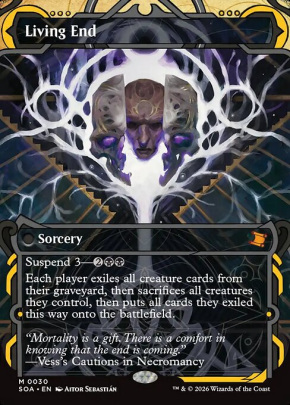
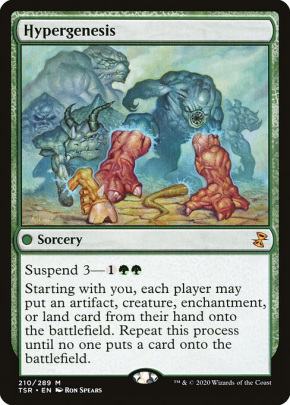 The way that you can cast these cards is that you can abuse the cascade ability, which will flip cards from the top of your library until you reveal a card that has a lesser casting cost. So with the deck there are no cards that cost less than the cascade cards themselves.
Once again we had Alara Reborn expansion that had a focus on bi-colored cards, and within that they printed a reasonable number of cascade cards.
We are looking to use a number of these to help our plan of casting Living End or Hypergenesis.
The question you have to ask yourself, is how to make them consistently hit the cards you want, therefore what is the highest converted-mana-cost you are willing to go? And then what would the rest of the deck look like?
Are you willing to have a deck that doesn't play any cards less than or equal to your cascade cards to make sure that you 100% hit either Living End or Hypergenesis?
For example if you have Lim-Dûl's Vault in the deck then you have a chance of hitting it off cascade. This might not be a bad thing however, but you have to weigh it up.
The conclusion is that it's reasonable to aim for the three mana cascade spells as the "top-end" for your guaranteed no-cost casts; Ardent Plea, Demonic Dread, Violent Outburst, Shardless Agent.
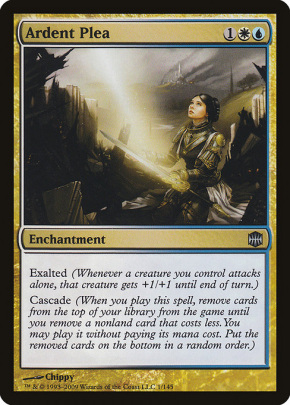
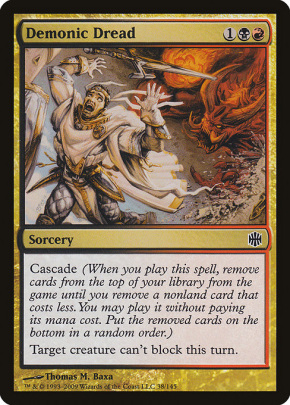
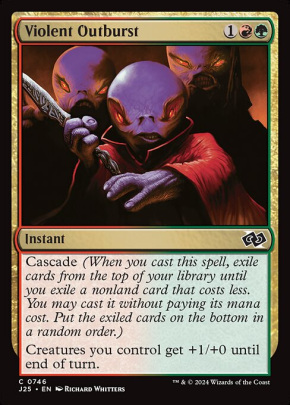
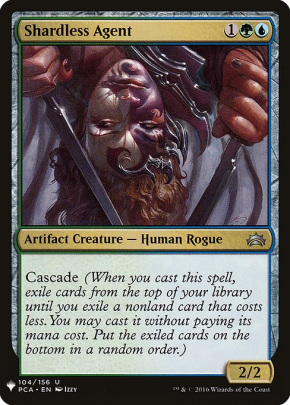
And now what you can do is look for the rest of the deck to be three or more mana, so that we can guarantee hitting Living End or Hypergenesis.
With triggering Niv-Mizzet Reborn multiple times, you'll have a high chance of finding at least one of these cascade cards.
The pay-off creatures
 The cycling creatures are a little underwhelming for the Commander format. With a game plan of wanting to put powerful creatures onto the board, we have a select number of bi-colored creatures to choose from in Magic.
There are a number of factors when making the decision on who to include. Primevals' Glorious Rebirth has a stipulation of legendary permanents, so this needs to be a major factor.
I've been playing the deck in various configurations since War of the Spark release (May 2019), with mainly the creature base being altered. So I've tried a lot of different creatures.
Going back to making sure you have an even distribution of color-pairings, this has a huge impact on what you play. Given that slots are already taken up by cascade cards and cycling cards in those bi-color pairings we only have room for so many creatures in each color.
Because of the nature of cheating your creatures into play, we really want them to have a big impact when they hit the board. And so through trial, error and success, I feel like I've got what I consider to be a great collection of creatures for this strategy.
On the whole they are what I consider to be the more impactful creatures in the guilds, and have the capacity to take over the game, if not win it on the spot with devastating abilities and stats for alpha strikes. I list and explain these creatures in the "Card Choices" section.
During my research around Niv-Mizzet Reborn I noticed that there were a reasonable amount of bi-colored cycling cards. Especially within Alara Reborn expansion as one of it's main themes.
Because Niv-Mizzet Reborn is not going to get you lands naturally off his trigger, this has an element of being able to draw you lands. Amazing!
If you can imagine that you get to exile Niv-Mizzet Reborn potentially every players turn once you are setup. Because you'll be looking at 10 more cards each time, your chances of drawing into other cycling cards are very high.
You can even using the ones that get lands types; Igneous Pouncer, Jhessian Zombies, Pale Recluse, Sanctum Plowbeast, Valley Rannet to get the land-type cycle lands in; Canyon Slough, Fetid Pools, Irrigated Farmland, Scattered Groves, Sheltered Thicket for even more cycling triggers.
There is almost no way you can miss drawing into further cyclers. It's just a case of having the mana available to pay for each of the cycling cards in the first place.
If you can imagine in a four player game, getting Niv-Mizzet Reborn to trigger four times for one turn round, that you will have seen 40 cards off the top your library! That's literally nearly half your deck.
What to do with all of these cards?
Well let's say in the example of getting a full turn round with an Astral Slide/Astral Drift you get to put 30% of those cards into your hand, a low estimate given an example of a poor outcome.
That's still about 12 cards in hand, with a selection of almost half your deck. What would be the best cards in this situation?
Hypothetical methods of getting cards into play from hand
SPOILER
Show
Hide
How can you get all your creatures into play from your hand? This next section is going to briefly touch on some hypothetical methods, so that you can see logical steps and conclusions that I made towards my actual solution.
Well there are only a few bi-color cards that can really do this sort of thing. These allow for some mana burst, Mirari's Wake, Cadaverous Bloom.
Hunting Grounds is another card that can easily reach threshold by discarding due to hand size. This will allow you to get multiple creatures into play every round.
But otherwise you are stuck with trying to gain mana over basically things that can give you small additional gains. Mana creatures or artifacts like Radha, Heir to Keld and Wildfield Borderpost are examples of these.
Better example might be Kiora's Follower used to untap a mana source that even might give you lots of additional mana (Gaea's Cradle?).
But in the long run trying to cast all your cards is one of the overall bottlenecks of trying to leverage off bi-colored cards. I've investigated and tried a few things and you are normally left with "fair" means of using these types of cards.
What singular cards that are not bi-colored could you potentially use to get all your creatures into play? Omniscience, Myojin of Life's Web, Eureka or even Hypergenesis are all cards that you could potentially use.
 Hypothetical methods of getting cards into play from graveyard
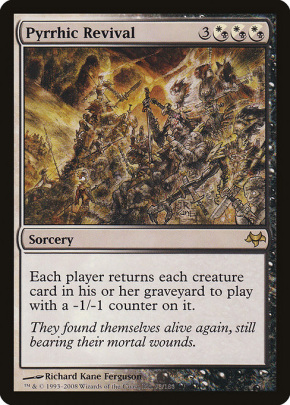
Orzov gives you access to bi-colored mass reanimation cards in Pyrrhic Revival, Primevals' Glorious Rebirth, Immortal Servitude.
You would already have cycling creatures in your graveyard, and you could look at discard outlets to put further creatures/legendary permanents into your graveyard. If all else fails you can discard them during your end step to wait a turn.
As far as non-colored paired cards that you could hypothetically look to use are; Living Death, Twilight's Call, Rise of the Dark Realms or even Living End.
Well there are only a few bi-color cards that can really do this sort of thing. These allow for some mana burst,
Mirari's Wake, Cadaverous Bloom. Hunting Grounds is another card that can easily reach threshold by discarding due to hand size. This will allow you to get multiple creatures into play every round.But otherwise you are stuck with trying to gain mana over basically things that can give you small additional gains. Mana creatures or artifacts like Radha, Heir to Keld and Wildfield Borderpost are examples of these.
Better example might be
Kiora's Follower used to untap a mana source that even might give you lots of additional mana (Gaea's Cradle?).But in the long run trying to cast all your cards is one of the overall bottlenecks of trying to leverage off bi-colored cards. I've investigated and tried a few things and you are normally left with "fair" means of using these types of cards.
What singular cards that are not bi-colored could you potentially use to get all your creatures into play? Omniscience, Myojin of Life's Web, Eureka or even Hypergenesis are all cards that you could potentially use.
Orzov gives you access to bi-colored mass reanimation cards in
Pyrrhic Revival, Primevals' Glorious Rebirth, Immortal Servitude.You would already have cycling creatures in your graveyard, and you could look at discard outlets to put further creatures/legendary permanents into your graveyard. If all else fails you can discard them during your end step to wait a turn.
As far as non-colored paired cards that you could hypothetically look to use are; Living Death, Twilight's Call, Rise of the Dark Realms or even Living End.
I've mentioned two quite unusual cards in Living End and Hypergenesis within this hypothetical framework, and really these are the inspiration and key cards behind this deck, along with the
Orzov mass reanimation cards.Some of you might be familiar with the Modern deck simply titled "Living End", and it to uses cycling creatures to get cards into the graveyard. It has been a top-tiered deck since Travis Woo first brought his brew to Grand Prix Houston in 2010. There have been many changes and iterations over the years, but it remains a staple to the format meta as new cards are always being printed that helps to create stronger payoffs and it's just a concept that works really well. This article has a great run down on the decks history and lists => https://article.hareruyamtg.com/article/31390/?lang=en
Once again we had Alara Reborn expansion that had a focus on bi-colored cards, and within that they printed a reasonable number of cascade cards.
We are looking to use a number of these to help our plan of casting Living End or Hypergenesis.
The question you have to ask yourself, is how to make them consistently hit the cards you want, therefore what is the highest converted-mana-cost you are willing to go? And then what would the rest of the deck look like?
Are you willing to have a deck that doesn't play any cards less than or equal to your cascade cards to make sure that you 100% hit either Living End or Hypergenesis?
For example if you have Lim-Dûl's Vault in the deck then you have a chance of hitting it off cascade. This might not be a bad thing however, but you have to weigh it up.
The conclusion is that it's reasonable to aim for the three mana cascade spells as the "top-end" for your guaranteed no-cost casts;
Ardent Plea, Demonic Dread, Violent Outburst, Shardless Agent.And now what you can do is look for the rest of the deck to be three or more mana, so that we can guarantee hitting Living End or Hypergenesis.
With triggering Niv-Mizzet Reborn multiple times, you'll have a high chance of finding at least one of these cascade cards.
The pay-off creatures
There are a number of factors when making the decision on who to include. Primevals' Glorious Rebirth has a stipulation of legendary permanents, so this needs to be a major factor.
I've been playing the deck in various configurations since War of the Spark release (May 2019), with mainly the creature base being altered. So I've tried a lot of different creatures.
Going back to making sure you have an even distribution of color-pairings, this has a huge impact on what you play. Given that slots are already taken up by cascade cards and cycling cards in those bi-color pairings we only have room for so many creatures in each color.
Because of the nature of cheating your creatures into play, we really want them to have a big impact when they hit the board. And so through trial, error and success, I feel like I've got what I consider to be a great collection of creatures for this strategy.
On the whole they are what I consider to be the more impactful creatures in the guilds, and have the capacity to take over the game, if not win it on the spot with devastating abilities and stats for alpha strikes. I list and explain these creatures in the "Card Choices" section.
They have all been 5-color brews, with really just changing the range of payoff cards themselves around this shell. The last version I had settled on had another sub-theme around using Grozoth as a potential way to fill your hand with multiple payoff cards when you cast Hypergenesis. So as you can imagine a lot of the cards were 9 casting cost.
So I already had experience with this type of deck design, however Niv-Mizzet Reborn reopened a way to fill your hand or graveyard based on a number of multi-colored cards, and hence why this deck has come to fruition. Being able to marry the already bi-colored cascade cards meant that the number of cascade cards could be reduced because of the help Niv-Mizzet Reborn can be to find those cards.
It is definitely one of my spiciest and unique brews, and I have seen it inspire people to build around similar ideas since I originally started the thread on MTGSalvation.
Alternative Commanders
It's hard to recommend alternative commanders as the deck design is by far the most important element.
I would say the cascade element is the most unique idea to the deck. Then the draw/reveal from the command zone.
SPOILER
Show
Hide
Niv-Mizzet, Guildpact plays on the idea drawing cards and playing bi-colored cards for advantages. Although it is permanents you need for the draw, so you'd want to play early bi-colored cards. This works against the idea of cascade plan to a degree.
Atraxa, Grand Unifier is one of the better draw/reveal ETB from the command zone and is in black and green for the cascade options.
Jodah, Archmage Eternal does have the advantage that if you draw Living End or Hypergenesis that you can actually use his to cast them anyway from your hand. You could make up for his lack of draw with playing big draw cards instead.
There are a number of commanders who have a built in cascade. They do however lack a natural ability to fill your hand or graveyard with cards, so you'd need to design the deck around cards that do that for you, rather than the command zone.
The First Sliver has in built cascade. We are lacking natural draw to fill our hand and graveyard, but you can build the deck to utilize Slivers to hit Living End/Hypergenesis rather than normal cascade cards. You could try to make up for the lack of draw, by using tribal draw cards (or other) or ways to put cards into your graveyard.
Yidris, Maelstrom Wielder is another cascade commander and you would have the advantage of setting up 1 cmc cards to hit the Living End/Hypergenesis. This way you can have a lower curve in general. Once again you'd need to have ways to fill up your hand and graveyard with cards outside of your command zone however.
Abaddon the Despoiler does not have green identity, so this would need to be a Living End only deck.
In conclusion however, Niv-Mizzet Reborn is really special and unique to the overall deck design and you have to go fairly out of your way to build around the other commanders in a similar fashion.
This I believe is a good thing. It means that the design team did a good job of bringing us something unique.
Atraxa, Grand Unifier is one of the better draw/reveal ETB from the command zone and is in black and green for the cascade options.
Jodah, Archmage Eternal does have the advantage that if you draw Living End or Hypergenesis that you can actually use his to cast them anyway from your hand. You could make up for his lack of draw with playing big draw cards instead.
There are a number of commanders who have a built in cascade. They do however lack a natural ability to fill your hand or graveyard with cards, so you'd need to design the deck around cards that do that for you, rather than the command zone.
The First Sliver has in built cascade. We are lacking natural draw to fill our hand and graveyard, but you can build the deck to utilize Slivers to hit Living End/Hypergenesis rather than normal cascade cards. You could try to make up for the lack of draw, by using tribal draw cards (or other) or ways to put cards into your graveyard.
Yidris, Maelstrom Wielder is another cascade commander and you would have the advantage of setting up 1 cmc cards to hit the Living End/Hypergenesis. This way you can have a lower curve in general. Once again you'd need to have ways to fill up your hand and graveyard with cards outside of your command zone however.
Abaddon the Despoiler does not have green identity, so this would need to be a Living End only deck.
In conclusion however, Niv-Mizzet Reborn is really special and unique to the overall deck design and you have to go fairly out of your way to build around the other commanders in a similar fashion.
This I believe is a good thing. It means that the design team did a good job of bringing us something unique.
Why play Astral-Living-Genesis?
You might like Astral-Living-Genesis if..
- You enjoy reactions of awe of how unique of an idea it is and how well it works.
- You like getting numerous dominant legendary creatures into play at once. Who doesn't right?
- You enjoy unusual stipulations behind cards for puzzle solving.
- You want to build this on a medium budget. Fun and powerful for dollars invested.
You might dislike Astral-Living-Genesis if..
- You dislike not having any early turn plays, given the cheapest cards are 3 cmc.
- You dislike being all-in on the combo nature of the deck.
- You dislike limited interaction, especially during the early game.
- You have Dracophobia.

*Being reborn ended up too literal for his liking.

Niv-Mizzet Reborn - Astral-Living-Genesis

SPOILER
Show
Hide
Cascade into
Literally 2/3 of the name sake of the deck, these cards will more often than not be your path to victory.
Literally 2/3 of the name sake of the deck, these cards will more often than not be your path to victory.
Living End - Is often the more appealing card to cascade into, due to opponents playing creatures onto the board and potentially needing to deal with them, so acts as a board wipe as well. Also you can set up your graveyard over the course of a number of turns, where Hypergenesis you want to fill your hand and get the effect off, which is a little harder to do.
Hypergenesis - More random in nature due to not knowing what opponents might have in hand, and less ways to deal with opponents' hand as a resource.
There are times when you cast a cascade card and hit Hypergenesis and then you choose not to cast it. The idea is that your follow up cascade will then hit Living End. But it's important to have both in the deck as you can plan for either, as this deck does have the ability to put cards into your hand and into your graveyard. If you naturally draw one of them, then it means that your cascade cards are still useful. It is possible to cast one, to have your board dealt with, so having access to the other is needed for longer games.
There are times when you cast a cascade card and hit Hypergenesis and then you choose not to cast it. The idea is that your follow up cascade will then hit Living End. But it's important to have both in the deck as you can plan for either, as this deck does have the ability to put cards into your hand and into your graveyard. If you naturally draw one of them, then it means that your cascade cards are still useful. It is possible to cast one, to have your board dealt with, so having access to the other is needed for longer games.
Cascade
As previously mentioned we are only playing the 3 cmc cascade cards, so that allows us to have other 3 cmc cards in the deck for general play.
There are only 4 of these, but I find that between wanting time to setup your graveyard or hand and with Niv-Mizzet Reborn ability to draw you them, you are not waiting too long for one of these. It's the perfect number in my opinion anyway.
Just to clarify some rulings around converted mana cost of cards, split cards like Wear // Tear have a combined converted mana cost of both the halves of the card (while not on the stack). So Wear // Tear actually has a converted cost of 3 mana for the purposes of the cascade ability.
As previously mentioned we are only playing the 3 cmc cascade cards, so that allows us to have other 3 cmc cards in the deck for general play.
There are only 4 of these, but I find that between wanting time to setup your graveyard or hand and with Niv-Mizzet Reborn ability to draw you them, you are not waiting too long for one of these. It's the perfect number in my opinion anyway.
Just to clarify some rulings around converted mana cost of cards, split cards like Wear // Tear have a combined converted mana cost of both the halves of the card (while not on the stack). So Wear // Tear actually has a converted cost of 3 mana for the purposes of the cascade ability.
Violent Outburst - This is the only cascade card that you can cast at instant speed. This means that you can be patient with this and use it in response to what opponents might be doing in their turns. A good example of this is being attacked by a sizable amount of creatures and then either going for Living End to remove the board (and attacks) or even Hypergenesis to give yourself more blockers. But it's even just the surprise value you can do just before your turn, so that you can alpha strike opponents in a very unexpected manner. Demonic Dread - Purely in the deck for the cascade into either Living End or Hypergenesis. You need to target a creature, but in multiplayer there is almost certainly something on the board. Shardless Agent - Purely in the deck for the cascade into either Living End or Hypergenesis. Will still be on the stack when Living End resolves, so that you still get it into play. Wildsear, Scouring Maw - Not a cascade card itself, but can get triggers off your enchantments. There are not many, Astral Slide, Astral Drift, Strength of the Harvest that can all be used to cascade into the combos. Wildsear is a big legendary creature, so still a good body at other times.
Graveyard reanimation
With more effects helping graveyard reanimation, the overall gameplan is usually to aim for getting cards into your graveyard, Orzov comes to the forefront of offering effects that can do this.
With more effects helping graveyard reanimation, the overall gameplan is usually to aim for getting cards into your graveyard, Orzov comes to the forefront of offering effects that can do this.

Living Death - One of my all-time favorite cards. When Tempest came out I was just like "this card is bonkers!". Both a creature board wipe and mass graveyard reanimation, there are few effects that can have as big an impact on play as this. Basically a backup to the Living End plan if you might draw it naturally.
Pyrrhic Revival - Because all the creatures in the deck have high power and toughness the -1/-1 counters doesn't effect the overall impact of being able to mass reanimate your graveyard.As a bi-colored card, you will have a high chance of revealing with Niv-Mizzet Reborn, so you can lean heavily on having access to this effect.
Primevals' Glorious Rebirth - This can have the upside of also bringing your planeswalkers into play from graveyard, which the other reanimation spells only effect creatures.As a bi-colored card, you will have a high chance of revealing with Niv-Mizzet Reborn, so you can lean heavily on having access to this effect.
Exile creatures and return to battlefield
These are mainly for targeting Niv-Mizzet Reborn to get him to trigger additional times. But you can use it on a number of your other creatures that have ETB effects, and you can also use them as defensive or protective purposes.
Maybe your opponents are attacking you for lethal damage with creatures, and you can exile them to negate damage. Or opponents target your creatures for permanent removal and you can protect them with the exile abilities.
These are mainly for targeting Niv-Mizzet Reborn to get him to trigger additional times. But you can use it on a number of your other creatures that have ETB effects, and you can also use them as defensive or protective purposes.
Maybe your opponents are attacking you for lethal damage with creatures, and you can exile them to negate damage. Or opponents target your creatures for permanent removal and you can protect them with the exile abilities.
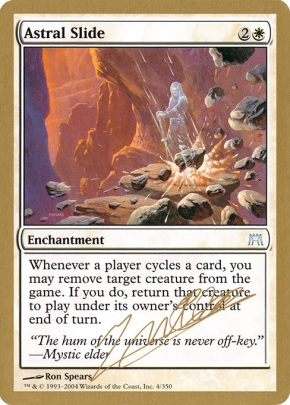
Astral Slide - Perfect for removing both your own creatures or even opponents' if they are threatening to win on the spot with a creature or attack/block.
Even though it's one of the name sake cards of the deck, it's not a bi-colored card so you can't get it off Niv-Mizzet Reborn trigger. There are not a lot of tutors in the deck either, due to the nature of bi-colored cards and also cascade stipulations. This does mean that you are at the mercy of hoping to draw these cards during the game, and statistically speaking you will play far fewer games not having this engine setup, than you will have it.
Even though it's one of the name sake cards of the deck, it's not a bi-colored card so you can't get it off Niv-Mizzet Reborn trigger. There are not a lot of tutors in the deck either, due to the nature of bi-colored cards and also cascade stipulations. This does mean that you are at the mercy of hoping to draw these cards during the game, and statistically speaking you will play far fewer games not having this engine setup, than you will have it.
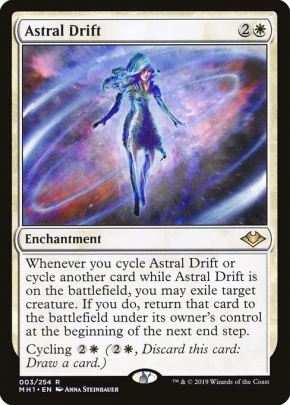
Astral Drift - The second version has the slight upside of having cycling itself, so you can discard and draw if you already feel you have an engine going with the original Astral Slide. Interestingly this was printed after my initial build, so this was an amazing card to double up on the exile with cycling effects, which was an awesome boon to the deck.
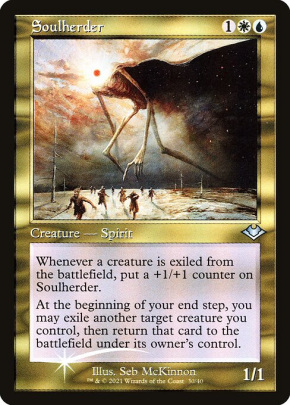 Soulherder - Can only be used once per turn cycle, but is still perfect for getting an additional trigger from Niv-Mizzet Reborn. Gives you a chance to discard at end of turn as well, meaning you can set up graveyard for the reanimation spells.
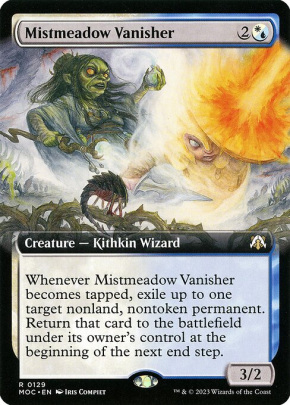 Mistmeadow Vanisher - Needs to tap to trigger, so only really when you can attack with it. Plenty of haste enablers in the deck. Even if you attack it gets blocked and killed, a single trigger most times is going to be worth it.
 Yorion, Sky Nomad is another blink effect. The neat thing is this that you can use a Astral/cycle effect on it to get the ETB of all your permanents, not only Niv-Mizzet Reborn.
Cycling
The cycling cards have been prioritized on cycling specifically for lands. The reason is mainly that we want to be able to consistently fix our mana, but also because "drawing" is not exactly what we want. Now this sounds strange when Niv-Mizzet Reborn ability is to specifically fill your hand with cards, but revealing color-paired cards and normal draw are completely different, and this comes down to not wanting to draw Living End or Hypergenesis during the early part of the game.
So there are some other bi-colored cards that cycle, but after play testing them, I decided that you really only want the ones that allow you to search for lands.
The cycling cards have been prioritized on cycling specifically for lands. The reason is mainly that we want to be able to consistently fix our mana, but also because "drawing" is not exactly what we want. Now this sounds strange when Niv-Mizzet Reborn ability is to specifically fill your hand with cards, but revealing color-paired cards and normal draw are completely different, and this comes down to not wanting to draw Living End or Hypergenesis during the early part of the game.
So there are some other bi-colored cards that cycle, but after play testing them, I decided that you really only want the ones that allow you to search for lands.
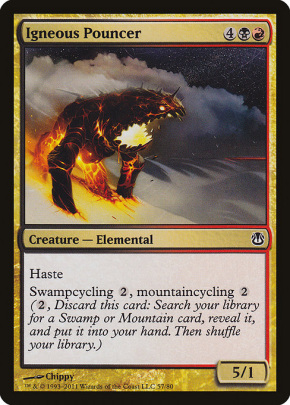 Igneous Pouncer - Can search for Swamp or Mountain; Blood Crypt, Canyon Slough, Overgrown Tomb, Watery Grave, Fetid Pool, Godless Shrine, Sheltered Thicket, Stomping Ground, Sacred Foundry.
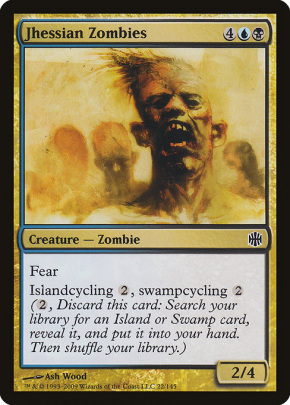 Jhessian Zombies - Can search for Swamp or Island; Blood Crypt, Canyon Slough, Overgrown Tomb, Watery Grave, Fetid Pool, Godless Shrine, Irrigated Farmland, Steam Vents, Hallowed Fountain, Breeding Pool.
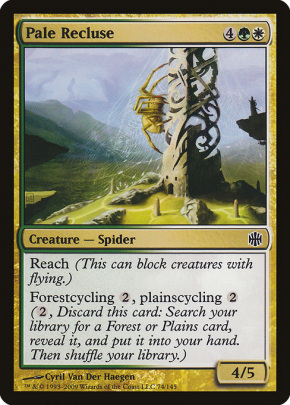 Pale Recluse - Can search for Plains or Forest; Scattered Groves, Temple Garden, Godless Shrine, Hallowed Fountain, Sacred Foundry, Sheltered Thicket, Stomping Ground, Breeding Pool, Overgrown Tomb.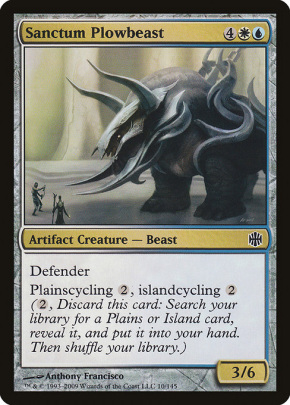
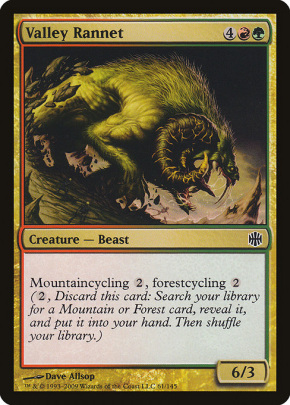 Valley Rannet - Can search for Mountain or Forest; Blood Crypt, Canyon Slough, Sheltered Thicket, Stomping Ground, Sacred Foundry, Stomping Ground, Breeding Pool, Overgrown Tomb, Temple Garden.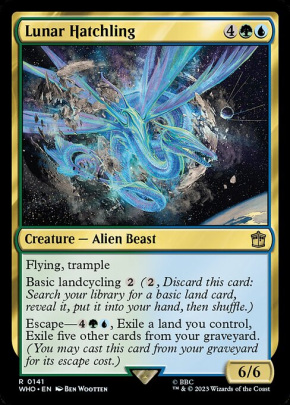
 The Balrog of Moria - The only cycle card that doesn't specifically search for a land, but draws instead. The treasure boost can be good and another big fatty for the graveyard.
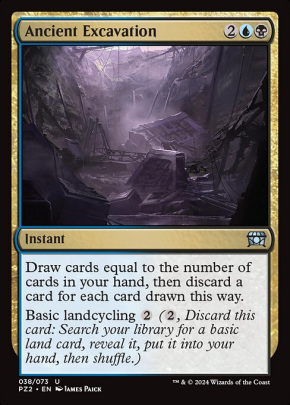 Ancient Excavation - Can search for basic lands in Plains, Island, Swamp, Mountain, Forest.
It's also another way of getting creatures into the graveyard for the reanimation cards. Pretty incredible card in the deck as you also get to select which cards you discard, as opposed to a number of cards that make you discard first then draw. So you get to double your hand size and then discard those that you want. It's also at instant speed which is perfect to do on opponent's end step for a big setup.
Tutors
We have some mono-colored cards that could potentially help, but unfortunately Niv-Mizzet Reborn does not give us access to them.
We have some mono-colored cards that could potentially help, but unfortunately Niv-Mizzet Reborn does not give us access to them.
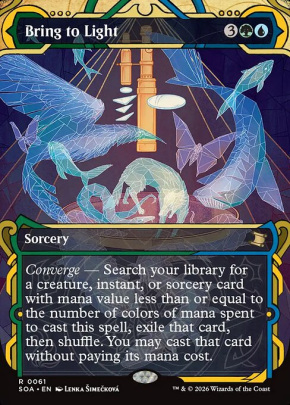 Bring to Light could be used to cast for example Living Death if you spent .
It can also cast Living End, Hypergenesis as examples of key cards.
You can use it to give you access to other key cards like Astral Slide.
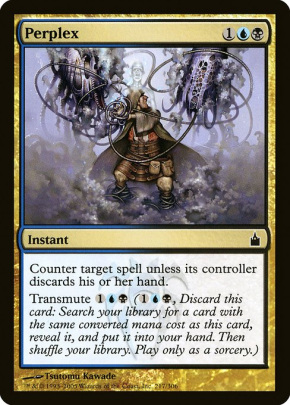 Perplex can be transmuted to get Astral Slide or any of the cascade cards, so is a nice bi-colored option. Weirdly you can go to counter your own graveyard reanimation cards and then discard your hand (to make sure it still resolves) to get all the creatures in your hand into your graveyard. But 9/10 times this will be used for the transmute.
Removing opponents' graveyards
Because of Living End, Living Death and Pyrrhic Revival, it's nice to have some potential ways of removing creatures from opponents' graveyards before you cast them.
Because of Living End, Living Death and Pyrrhic Revival, it's nice to have some potential ways of removing creatures from opponents' graveyards before you cast them.
 Ashiok, Dream Render doubles as both a way to remove opponents' graveyards as well as prevent searching effects. It is a planeswalker however and you're not all that well equipped to protect it, so don't expect it to remain in play through the course of the game. It might be that you only play it the turn before you want to reanimate to insure clearing graveyards, or if you have enough mana the same turn.
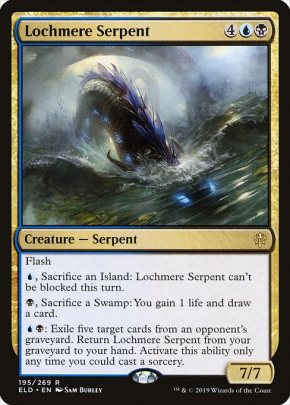 Lochmere Serpent can use the exile ability from your graveyard which ties in perfectly with the discard plan of the deck. Also provides another beefy body to pressure opponents.
Unlikely going to use the sacrifice portions of the card, although during an alpha strike unblockable is nice, and with Fires of Invention in play sacrificing a Swamp isn't going to set you back for drawing card. However it is not a legendary creature for Primevals' Glorious Rebirth.
Draw related creatures
I've previously alluded to the fact that you don't want to be "drawing" too many cards during the setup period (early game) as you don't want to draw your cascade targets before you've cast a Living End or Hypergenesis. However once you've cast one of them, you are wanting to draw as many cards as you can after that. This really helps with being able to reapply pressure in the face of removal.
I've previously alluded to the fact that you don't want to be "drawing" too many cards during the setup period (early game) as you don't want to draw your cascade targets before you've cast a Living End or Hypergenesis. However once you've cast one of them, you are wanting to draw as many cards as you can after that. This really helps with being able to reapply pressure in the face of removal.
Niv-Mizzet, Parun - It's good if you get a creature draw effect like Prime Speaker Zegana or Tishana, Voice of Thunder as part of the Living End/Hypergenesis plays as you get to distribute damage that might clear the way of troublesome creatures. Keruga, the Macrosage - Almost could be a companion for the deck, unfortunately the names sake of the deck and how it plays prevents that, but it is perfect with literally 97% of the deck 3 converted mana cost or over.
 The Gitrog, Ravenous Ride - A super strong ability as it allows you to put lots of lands into play. Even if your turn after casting Niv-Mizzet Reborn is to cast Gitrog and saddle, this will set you and nicely and sacrificing and sending Niv to the graveyard often might just be helping anyway.
 Tishana, Voice of Thunder - Requires a number of creatures in play already to get additional draw, but has the advantage over Prime Speaker Zegana in that with Living End or Living Death you will get the draw as the trigger goes on the stack and then you'll draw a card for each of your creatures.
 Torsten, Founder of Benalia - There are not that many non-creature cards in the deck, so you get most of the seven.
Mass haste creatures
Too often you find that you can get a big play off, filling the board with your massive army, only to have them wrath away before you can get value.
Giving haste to all your creatures I've found is an important element to making your plays really work, as you can alpha strike opponents for lethal after a Living End/Hypergenesis type play, often killing at least one player (if not all). It just allows you to make sure that you get value out of these big setups, which is very important as you invest a lot of time and resources into these plans.
Too often you find that you can get a big play off, filling the board with your massive army, only to have them wrath away before you can get value.
Giving haste to all your creatures I've found is an important element to making your plays really work, as you can alpha strike opponents for lethal after a Living End/Hypergenesis type play, often killing at least one player (if not all). It just allows you to make sure that you get value out of these big setups, which is very important as you invest a lot of time and resources into these plans.
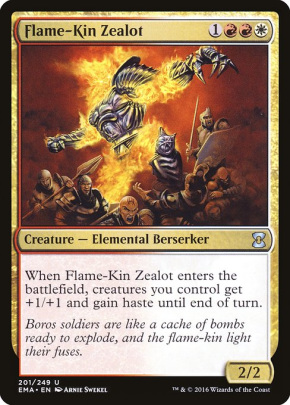 Flame-Kin Zealot - Gives haste and a +1/+1 bonus to all creatures, and I've used the fact that it's Boros to give a balance to the color-pairings. It is not a legendary creature for Primevals' Glorious Rebirth.
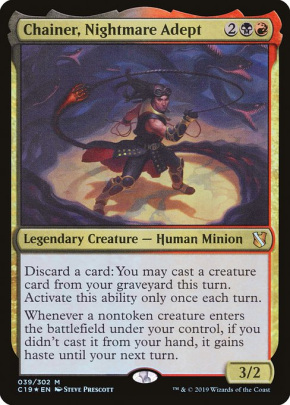 Chainer, Nightmare Adept - Is perfect with the fact that most times your creatures are not being cast, meaning that they get haste. The discard element is also perfect for setting up your graveyard. It might be that you use the ability on each of your opponents' turns to get a creature into the graveyard. It's a bit of a tell however.
 Garna, the Bloodflame - Gives all your creatures haste, but also has a way of getting your creatures back from removal. The perfect example would be if you set up a Living End and then an opponent cast a board wipe. You could cast Garna, the Bloodflame at instant speed to get them back to your hand. Then can set up for another cascade, and because the Living End has already been cast, you know it's going to be Hypergenesis. With all the creatures back in your hand, you can put them back into play.
 Samut, Voice of Dissent - Gives your creatures haste, and provides sizable stats to attack with. The untap can be used with some select creatures in Faeburrow Elder and Niv-Mizzet, the Firemind.
Combat matters
It probably not going to be any surprise that Boros has most of the combat matters cards.
It probably not going to be any surprise that Boros
has most of the combat matters cards.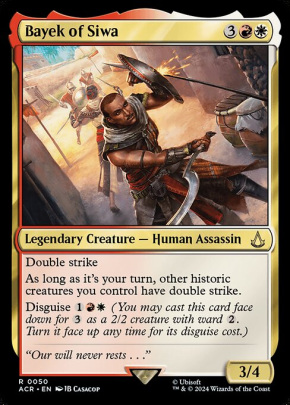 Bayek of Siwa - Double strike really can mean an alpha strike killing multiple opponents even at near starting lives.
 Aurelia, the Warleader - The ability to get an additional attack is as good as getting an additional turn in this deck with the ability to alpha strike your opponents to death with a mass board presence. Can get infinite attacks with Brago King Eternal.
 Medomai the Ageless - One of the best pay-off creatures in the deck, as the haste creatures often allow you to connect with it. The additional turn allows you to truly create lethal attacks on all your opponents, while also allowing for setting up other plays if necessary. Gisela, Blade of Goldnight - Impacts the board in so many ways. She makes combat very difficult for your opponents, proving both to threaten lethal attacks and any blocks or attacks are going to result in your opponents creatures dying, while yours remain in play. Also makes cards that look to remove creatures via damage pretty ineffective.
Removal
Some removal is fine especially for hate cards that might specifically shut down your strategy, but this deck is skewed towards a proactive plan of going over the top, rather than dealing with what opponents are doing. Plus the Living End is a board wipe for creatures, so you want opponents to commit to the board early on.
There are a few creatures that can deal with permanents, and these can be important. They'll be particularly relevant with mass reanimation and hand into play effects to try and nullify the fact that your opponents also get to put cards into play.
Some removal is fine especially for hate cards that might specifically shut down your strategy, but this deck is skewed towards a proactive plan of going over the top, rather than dealing with what opponents are doing. Plus the Living End is a board wipe for creatures, so you want opponents to commit to the board early on.
There are a few creatures that can deal with permanents, and these can be important. They'll be particularly relevant with mass reanimation and hand into play effects to try and nullify the fact that your opponents also get to put cards into play.
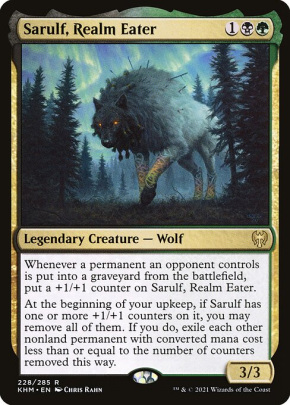 Sarulf, Realm Eater - It does have a may ability, but even if it has one or two counters it might very worth it, as this deck doesn't play less than 3 mana permanents.
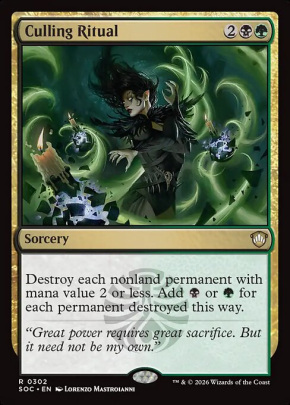 Culling Ritual - Perfect for opponents who have fast starts, and literally doesn't effect this deck at all, as there are no two mana or less permanents. Can give you a mana boost, although only gives green and black mana.
 Gruul Ragebeast - Can be a key card after a mass reanimation or hand into play effect to mitigate your opponents getting advantages out of them as well. Just make sure that you stack the "fights" so that you can avoid lethal damage happening to a creature. You can specifically target a creature that is going to die (with a fight) with the creatures you don't want to have to fight other creatures, to avoid taking any damage. With high power and toughness of most of your creatures you should have the upper hand in most cases anyway to successfully remove your opponents board while negating causalities yourself. It is not a legendary creature for Primevals' Glorious Rebirth.
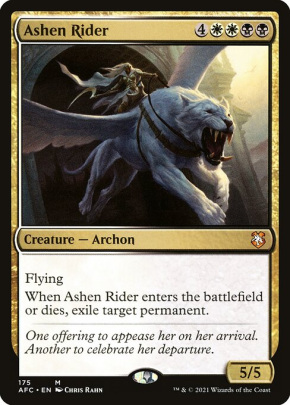 Ashen Rider - Provides a trigger on coming into play and dying, so you can lean on it to get multiple triggers during a game if you have access to it. Is able to remove any permanent so can be a catch all for any problematic card your opponents might put onto the battlefield. During a Hypergenesis put this into play last, so that you give opponents a chance to play their big card only to have it removed immediately. It is not a legendary creature for Primevals' Glorious Rebirth.
Protection from boardwipes
Putting all your creatures into play and hopefully attacking with haste to kill an opponent or two is always the plan, but sometimes you'll be passing the turn. Some ways to get around a board wipe can really help.
Putting all your creatures into play and hopefully attacking with haste to kill an opponent or two is always the plan, but sometimes you'll be passing the turn. Some ways to get around a board wipe can really help.
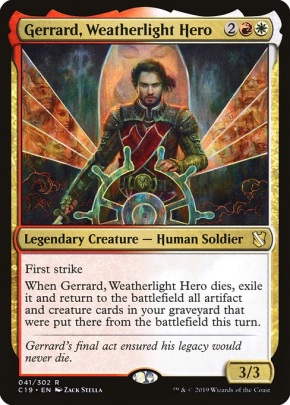 Gerrard, Weatherlight Hero - Will be a hero if he is in play and opponent does a board wipe.
 Ratadrabik of Urborg - Has the ability to bring back your legendary creatures, however they will only be 2/2. Still they all have amazing abilities, and the fact that your creatures don't get exiled to this effect means that you can still setup to bring them back from graveyard at a later time. The tokens not being legendary also means you get to double up on everything. Garna, the Bloodflame - I've already explained Garna in the haste section.
Recasting Living End/Hypergenesis
For toolbox options there are a few cards that allow you to get back cards from graveyard.
For toolbox options there are a few cards that allow you to get back cards from graveyard.
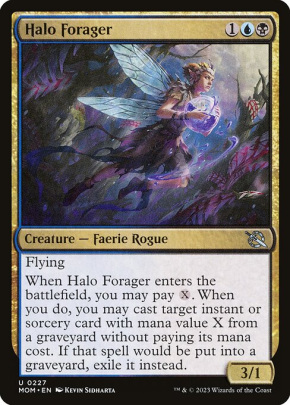
 Hag Hedge-Mage - With making sure you have two Forest in play, you can put a Living End or Hypergenesis back on top, to setup another cascade.
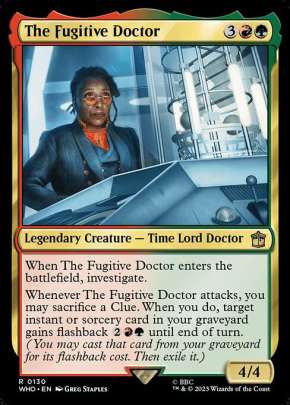 The Fugitive Doctor - Can give Living End or Hypergenesis a flashback cost of instead of normal costs.
Additional Mana
Besides the "cheating" cards into play plan, we do have a few sources of providing additional mana which can help with all the expensive spells in the deck.
Besides the "cheating" cards into play plan, we do have a few sources of providing additional mana which can help with all the expensive spells in the deck.
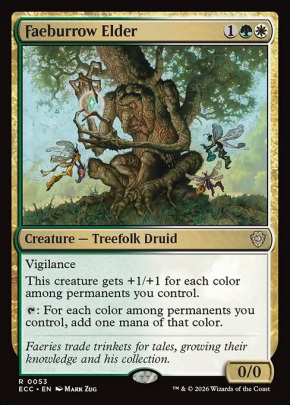 Faeburrow Elder - Just on its own it provides 2 mana, however with Niv-Mizzet Reborn in play can be tapped for 5 mana. Perfect for being able to cast another spell(s) after you fill your hand with cards with Niv. Same as Wilderness Reclamation as far as being able to hold up mana for cycling.
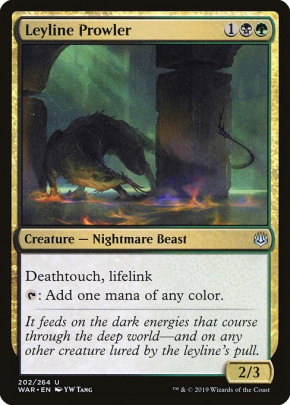 Leyline Prowler - Expensive mana dork, but you gotta do what you gotta do.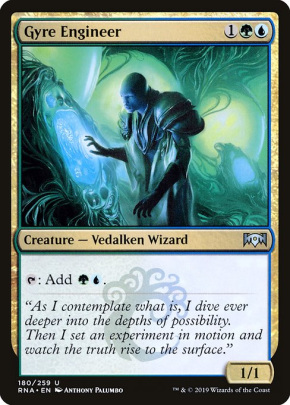
 Zirda, the Dawnwaker - allows cycling to cost less (but no less that ), which means that you can cycle all your cards for .
 Inga and Esika - The vigilance is nice so that you can do attacks and make sure you have defence for any swings back. Making your creatures into mana dorks is excellent for casting more spells.
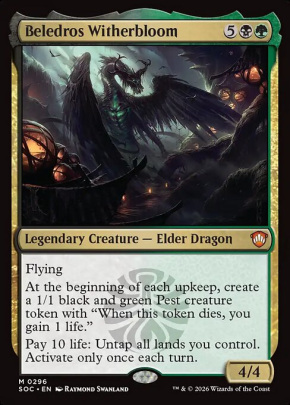 Beledros Witherbloom - The ability to untap lands at the expensive of life has been pivotal in some games. Even just having up mana for cycling is great.
Preventing opponent casting spells
As the game plan is so much around casting a Living End or Hypergenesis a single counterspell can ruin your fun. So there are a number of creatures that prevent your opponents casting spells.
As the game plan is so much around casting a Living End or Hypergenesis a single counterspell can ruin your fun. So there are a number of creatures that prevent your opponents casting spells.
 Kutzil, Malamet Exemplar - The ability to prevent counterspells or other interaction in your turn can really help to exact your game plan of casting Living End or Hypergenesis. Unfortunately there are no ways give your creatures a power boost in the deck at the moment, but I will keep it in mind as additional synergy if something comes up.
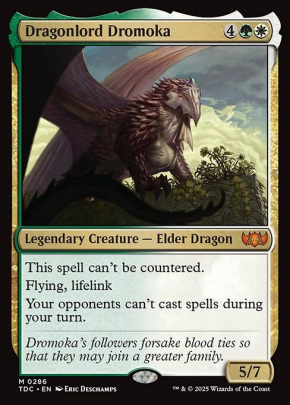 Dragonlord Dromoka - Great against control decks that look to interact with you at instant speed. If you are up against a heavy blue deck that is obviously holding up something to stop your cascade payoffs then it does pay to be patient and wait to cast it (if in hand) and wait a turn if need be. Make them have removal for Dragonlord Dromoka, otherwise you get to push your spells through.
 Archon of Valor's Reach - All sorts of ways you can use this card. If you are wanting to prevent sorcery mass removal then this can do the trick. This deck also plays no artifacts and hardly any enchantments, so can easily name either of those to shut down decks that rely on those strategies. Even naming instants works as a way to stop control/counterpsell decks looking to disrupt you. It is not a legendary creature for Primevals' Glorious Rebirth.
Counterspells
Some removal is fine especially for hate cards that might specifically shut down your strategy, but this deck is skewed towards a proactive plan of going over the top, rather than dealing with what opponents are doing. Plus the Living End is a board wipe for creatures, so you want opponents to commit to the board early on.
Some removal is fine especially for hate cards that might specifically shut down your strategy, but this deck is skewed towards a proactive plan of going over the top, rather than dealing with what opponents are doing. Plus the Living End is a board wipe for creatures, so you want opponents to commit to the board early on.
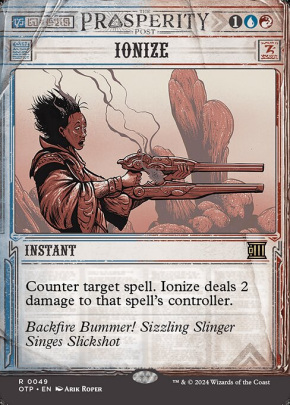 Ionize - 3 cmc counterspell most likely for pushing a Living End type spells through.
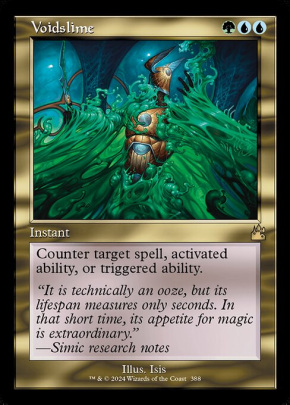 Voidslime - 3 cmc counterspell most likely for pushing a Living End type spells through, but can also be used to prevent some threatening triggered or activated ability, like perhaps removing your graveyard.
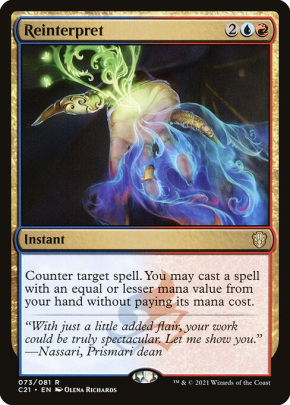 Reinterpret - Mainly used as a backup to cast Living End and Hypergenesis if you have drawn them. Nice to be able to cast these at instant speed as well, that can catch opponents off guard.
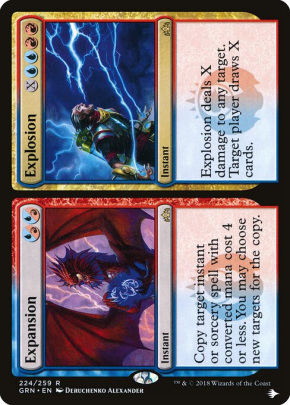 Expansion // Explosion - Although Expansion is not directly a counterspell, can be used to copy one that is trying to stop what you are doing. A two mana play that copies land is a nice example of an early play. I haven't cast the Explosion side of the card yet, it's pretty mana intensive.
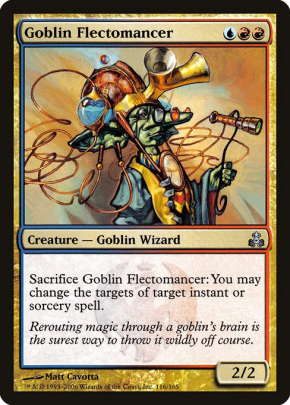 Goblin Flectomancer - Can be used on a counterspell to target itself. Lots of other applications that can come up in a game, and sacrificing it before doing a Living End is also beneficial.
Lands
The lands in the deck can be rearranged in many different ways to suit your budget. But it is important to have a number of them that have the basic land types for the purposes of searching with the land cycler cards so that you can fix your colors appropriately.
Because we are 9/10 times cheating our big fatties into play, it's not so important to fix the colors on those particular cards.
You might see Niv-Mizzet, Parun and think that you need a lot more blue and red, but really the secret is that you are only casting cascade and support cards more. You obviously need the to cast Niv-Mizzet Reborn, so fixing is still important however.
The lands in the deck can be rearranged in many different ways to suit your budget. But it is important to have a number of them that have the basic land types for the purposes of searching with the land cycler cards so that you can fix your colors appropriately.
Because we are 9/10 times cheating our big fatties into play, it's not so important to fix the colors on those particular cards.
You might see Niv-Mizzet, Parun and think that you need a lot more blue and red, but really the secret is that you are only casting cascade and support cards more. You obviously need the to cast Niv-Mizzet Reborn, so fixing is still important however.

Modal lands/spells - There are a number of bi-colored cards that have a modal ability to be played as a land from Modern Horizon 3. They are all the ones that are 3 mana or more; Strength of the Harvest // Haven of the Harvest, Rush of Inspiration // Crackling Falls, Glasswing Grace // Age-Graced Chapel, Drowner of Truth // Drowned Jungle, Bloodsoaked Insight // Sanguine Morass. The spells themselves are not that inspiring for the deck, but because it allows you to reveal lands off Niv-Mizzet trigger they really help to maintain land drops, while also getting more cards into hand, so that you can discard more creatures for a Living End.
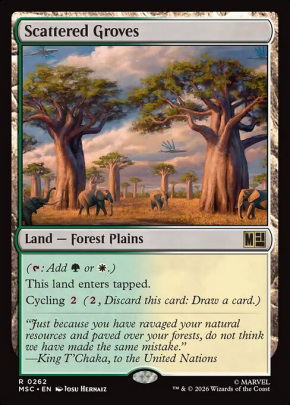
Bi-colored cycling lands - Canyon Slough, Fetid Pools, Irrigated Farmland, Scattered Groves, Sheltered Thicket.
You can in a perfect world with the Astral Slide engine going, use a land cycler like Pale Recluse to search for Scattered Groves and then cycle the Scattered Groves as well to get two triggers for Astral Slide if need be.
You can in a perfect world with the Astral Slide engine going, use a land cycler like Pale Recluse to search for Scattered Groves and then cycle the Scattered Groves as well to get two triggers for Astral Slide if need be.

Shocklands - Stomping Ground, Steam Vents, Godless Shrine, Watery Grave, Hallowed Fountain, Breeding Pool, Overgrown Tomb, Sacred Foundry, Blood Crypt.
If you can't afford some of these then you could look at the ally colored "Battle lands" as potential replacements; Canopy Vista, Cinder Glade, Prairie Stream, Smoldering Marsh, Sunken Hollow. It's important to keep the number of dual lands that you can search for with the land cycle reasonable high.
If you can't afford some of these then you could look at the ally colored "Battle lands" as potential replacements; Canopy Vista, Cinder Glade, Prairie Stream, Smoldering Marsh, Sunken Hollow. It's important to keep the number of dual lands that you can search for with the land cycle reasonable high.
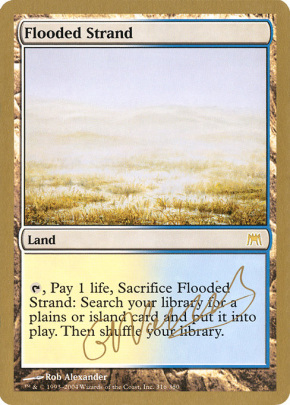
Fetchlands - Flooded Strand, Misty Rainforest, Polluted Delta, Scalding Tarn.
Specifically all the lands that can search for non-basic Islands so that you have access to search for Mystic Sanctuary in certain games, however still just can fix colors that you might need at the time..
Specifically all the lands that can search for non-basic Islands so that you have access to search for Mystic Sanctuary in certain games, however still just can fix colors that you might need at the time..

Multi colored lands - Command Tower, Exotic Orchard.
The deck is rounded out by some lands that can give you a multitude of colors. There are plenty more options like City of Brass, Mana Confluence to name a few, so you can just make things work accordingly to your budget.
The deck is rounded out by some lands that can give you a multitude of colors. There are plenty more options like City of Brass, Mana Confluence to name a few, so you can just make things work accordingly to your budget.
Basic lands - Plains, Island, Swamp, Mountain, Forest.
There is one of each mainly so that you can use the "basic land cycling" cards with Ancient Excavation, Sylvan Reclamation, Grave Upheaval to fix your colors as needed. It's also nice to have some leverage against non-basic land hate like Blood Moon and Path to Exile is a constantly used card, so fixing your mana base off an opponents' removal comes up a lot.
There is one of each mainly so that you can use the "basic land cycling" cards with Ancient Excavation, Sylvan Reclamation, Grave Upheaval to fix your colors as needed. It's also nice to have some leverage against non-basic land hate like Blood Moon and Path to Exile is a constantly used card, so fixing your mana base off an opponents' removal comes up a lot.
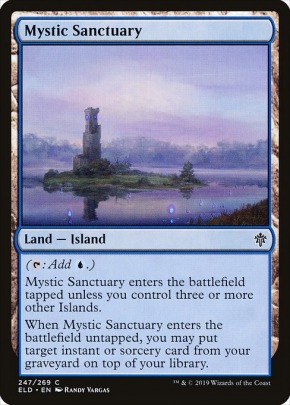
Mystic Sanctuary - One further tech is incorporating Mystic Sanctuary into the land base. Now because of the stipulation of needing 3 other Islands in play the deck has a lot of Island duel lands.
The reason is that you can use it to put either Living End or Hypergenesis back on top of your library in response to a cascade spell, ensuring that you cast what you want. You can get reuse out of these spells simply with a land. What's also good is that Mystic Sanctuary is itself an Island so that you can use fetchlands like Polluted Delta to search for it. So all your fetchlands that can get an Island can be used in this way.
An example would be that you've already cast Living End so that it's in your graveyard. You have a cascade card in hand and a fetchland that can get you an Island. You might have specifically been patient and not used it (fetchland) for potentially setting this up. You can search for Mystic Sanctuary and put the Living End on top of your library and now cast your cascade spell.
The reason is that you can use it to put either Living End or Hypergenesis back on top of your library in response to a cascade spell, ensuring that you cast what you want. You can get reuse out of these spells simply with a land. What's also good is that Mystic Sanctuary is itself an Island so that you can use fetchlands like Polluted Delta to search for it. So all your fetchlands that can get an Island can be used in this way.
An example would be that you've already cast Living End so that it's in your graveyard. You have a cascade card in hand and a fetchland that can get you an Island. You might have specifically been patient and not used it (fetchland) for potentially setting this up. You can search for Mystic Sanctuary and put the Living End on top of your library and now cast your cascade spell.

You've already got a comprehensive idea of the general game plan and interactions within the deck. This section is going to help you get a better idea of things you can expect through the course of the game, and potentially a few more interactions you can look for to help you win.
Starting hands and Mulligans

As such you are really just wanting to play lands during the early stages, so the most important aspect of keeping hands is to, well just have a good amount of lands. Now it is important to note that there are all the land cycle cards, so you can basically count these as lands as well in your opener.
Honestly there is nothing spell wise that you are looking for specifically in your opening hand, and even if you have a lot of big uncastable cards (until turn 6 or whatever), the plan is to use your "cheating" into play plans, so you can be happy to just keep any hand as long as you have lands to play.
There are 34 lands in the deck and with the 6 land cycling cards you could almost say its a 40 land deck. However I find myself having to mulligan quite aggressively to make sure to get enough lands in the opener.
Realistically you'll want at least 3 lands as part of your mulligans. If you have 2 lands and a land cycler then that is probably going to be good enough (depending on number of mulls already).
I find that even though it has a fine land count, that on average I'll mulligan more than other decks that have similar land counts. I figured out the reason why is that most other decks have a lot of early turn plays. Things like Sol Ring, Birds of Paradise, Signets, to name a few. So statistically speaking in these decks you might get a two lander, but the complimenting Sol Ring makes it an easy keep. This deck on the other hand doesn't have these early turn complimenting cards to entice you to keep two lander hands.
So you do end up mulligan often to get the 3 lands, as no other hands seem appealing.
If you have Living End or Hypergenesis in your starting hand you can basically count as being a card down, so unless the rest of the hand is good enough, I'll often send it back as it's such an important plan to cascade into them.
Early game

One of the better elements I've found with the deck is that if some opponents have really quick starts with mana, they end up emptying their hands. This makes your Hypergenesis much more effective as they've spent all their resources already and are often punished for fast starts because of this.
Now it is possible to do a Turn 3 cascade card in the hopes of hitting Hypergenesis, but casting it early does mean that your opponents have full hands as well so is risky. I'd only do this if I have a really good hand to back this up.
Examples might be if I have removal creatures like ,
Gruul Ragebeast or Ashen Rider so that I have a chance to deal with the most problematic permanents opponents might put into play.Other interactions I might look for is combining creatures like
Keruga, the Macrosage with Niv-Mizzet, Parun to draw a sizeable amount of cards and deal damage in perhaps a meaningful way to remove any problematic creatures.Even a mass haste creature and a combat damage specialist might be enough of an incentive.
For example
Samut, Voice of Dissent would allow Medomai the Ageless to connect the same turn, and you can use the additional turn to set up before opponents get a chance to get the advantages of the cards they put into play.There are a number of 3 drop creatures that provide mana, so any of these is nice, so that you can at least cast Niv-Mizzet Reborn on Turn 4.
Faeburrow Elder is also a great boon on Turn 3 and can really accelerate your ability to exact your plans.But most of the time you are probably spending on a land cycling card during the early game to fix your mana.
Mid game

The best cards that you can play leading up to this are usually your recursive engines. These are Astral Slide or Astral Drift,
Soulherder, for multiple exile effects allowing for additional Niv-Mizzet Reborn triggers.The main thing you are looking to do for setting up is often just casting Niv-Mizzet Reborn to get some more cards and start discarding due to hand size or sculpting your hand a certain way.
It literally might be that all you've done is play 5 lands and cast him as your only plays for the first 5 turns, and this is fine. The deck is designed essentially to "do nothing", until it just does everything.
It might be that you only discard a couple of cards at first. On the following turn you are looking to get at least another trigger from Niv-Mizzet Reborn to really get the card flow going.
At this stage you might have drawn a cascade card or two. So the question is "when do you cast it?"
There are a number of factors that come into play. However more often than not I don't look to spend too many turns trying to get "the best possible outcome".
Do you have enough of an impact with your graveyard if you hit Living End or do you have enough in hand to be happy with Hypergenesis?
Chances are the you are always doing more than opponents, and by quite a bit, so firing them off is always going to be in your best interest, even if they are not winning on the spot.
The major factor of firing them off relatively early is that you'll find that the effects you get from getting permanents into play also helps with subsequent setups for the future.
Maybe that is in the form of drawing lots of cards. Creatures like
Niv-Mizzet, Parun, Keruga, the Macrosage, Tishana, Voice of Thunder can help with this.If the cascade is random on either getting creatures from graveyard OR from your hand into play, then how can you plan around which one it is?
Well first of all remember that if we are seeing a reasonable amount of the deck with Niv-Mizzet Reborn, then there is a chance that it will reveal either Living End or Hypergenesis, or even perhaps both, and because they are not color-paired cards, we stick them onto the bottom of the library. In this respect we are certain to know which one we are going to cast when using a cascade spell, and you can plan accordingly.
With land cycling cards you just have to be mindful that cycling will end up shuffling your library.
But ultimately you can plan around both. Maybe you've discarded some creatures already and also have a bunch of cards in hand, meaning you're going to get massive value either way.
But more often than not, I'll specifically plan for Living End. The reason is that it's simply easier to setup your graveyard over a number of turns rather than mold your hand due to potentially having too many cards in hand anyway.
The important thing is that you don't have to cast the Hypergenesis or Living End if you reveal it. Sure you might be hoping for a particular one and fail to get the one you want, but now on subsequent cascades you'll know which one you'll get.
It does burn up your cascade spell, but there are a lot of games where you will have multiple cascade cards so can afford to cast them out without casting the effect.
There are a few other trick you can do to wait and see which one you hit. An example is that you might have a full hand of cards you want to put into play from a Hypergenesis, however you hit the Living End instead. With
Perplex you can go to counter your own spell, but discard your hand instead to get your creatures into your graveyard. Ancient Excavation can also be used in this way to discard your hand.Another play is casting Hypergenesis as a way to bait out opponents creatures, so that you can board wipe them with Living End on your next cascade.
So it might even be that you were hoping for Living End as you've set up your graveyard, but get the Hypergenesis. You can still cast the Hypergenesis even if you don't get many benefits with this in mind.
If you have two cascade cards you can cast then this is a perfect sequence.
Back-to-back cascades of Living End into Hypergenesis can often happen if you get the big draw as well off the Living End.
An example might be that you get to draw a bunch of cards off
Tishana, Voice of Thunder and you end up drawing another cascade card with further big fatties in hand that you drew (or had already). You can cast the cascade card for the guaranteed Hypergenesis meaning you get to effect the board even more.This works vise versa as well, in that you cast Hypergenesis and draw a bunch of cards off your creatures, and then at end of turn you get to discard a bunch of creatures to setup for the Living End that you know you are guaranteed to hit with the other cascade you have.
Of the cascade cards
Violent Outburst is the most versatile as you can cast it at instant speed. This means that you can wait or respond to what opponents are doing. An example is waiting for combat and your opponents attack you. You can cast it and if you hit Living End it send their creatures to the graveyard, or if you hit Hypergenesis then you can put some impressive blockers into play.You can cast it just before your turn to make sure you get the first turn of advantages of the creatures put into play.
But it must be said that if your opponents are allowing you time to setup even further then you can take the opportunity to be greedy, as often this just means you can produce lethal attacks all in one turn.
Cards that you are hoping to avoid through these turns is graveyard hate if looking to setup mass reanimation. A Bojuka Bog feels terrible if you've spent the game setting up your graveyard. Honestly I'll weigh up how many opponents are playing black sometimes to make my decision on playing out further turns to risk-it-for-the-biscuit.
Late game
 Pyrrhic Revival or Primevals' Glorious Rebirth.
There are a few grindy elements like
Ashen Rider used with a recursive exile engine will be enough to grind opponents out of threats.But really this isn't strategically the way to look to win. This deck wins via the "cheating" permanents onto the battlefield and these often lead to win within a turn or two if not answered.
The deck is able to fight through several mass removal effects. There are four mass reanimation cards; Living End, Living Death,
Pyrrhic Revival or Primevals' Glorious Rebirth, so unless your opponents specifically have a way to remove your graveyard, you can just keep looking to get all your cards back.There is also the cards that protection from board wipes themselves
Gerrard, Weatherlight Hero, Ratadrabik of Urborg, Garna, the Bloodflame.Plus the counterspells can be used to prevent a board wipe.
Additional strategic advice

It is harder, as I say getting a threshold of impactful cards into your hand is more tricky, but there are plenty of ways to do this.
Niv-Mizzet Reborn trigger being one of the best. If you have the Astral engines going then you can just keep filling up your hand through opponents turns and you'll have a lot of ammo to use on your opponents.
A play pattern that I've recognized is that this deck is great against the boogeyman Cyclonic Rift. With Hypergenesis in the deck you can just completely make the Rift have seemly done nothing and often catch the opponent (who cast it) off guard for an alpha strike. The common example would be that you've done a big Living End play. Now you know your cascade target is going to be Hypergenesis so if your opponents cast Cyclonic Rift then you know you can get all your permanents back into play off a cascade card.
Notable example play
Show
Hide
Just had to tell you of probably the most satisfying sequence I've had with this. I had cast Ardent Plea to cascade into Living End bringing a bunch of creatures into play. I had a mass haste creature with Garna, the Bloodflame and an opponent waited until my attack phase to cast Cyclonic Rift. One of the other attackers was Aurelia, the Warleader so I had an additional attack now stored up. I also had Violent Outburst in hand, so cast it immediately to cast the Hypergenesis, meaning I could put all the permanents that got returned to hand back into play straight away. I used the additional attack to then attack with my creatures and Aurelia, the Warleader was a "new" copy so allowed for an additional attack trigger again. Killing the opponent for lethal, like they had never cast the Rift in the first place. Ahhh, these are the plays I live for.
One more thing to consider is whether to send Niv-Mizzet Reborn to your graveyard or command zone during removal. The reason is that with the mass reanimation often it's beneficial to send him to the graveyard instead.
It is more risky as your reanimation spells might be stopped, meaning you have less access to Niv-Mizzet Reborn.

SPOILER
Show
Hide
13-04-2019
Show
Hide
Add
Remove
19-04-2019
Show
Hide
Remove
30-04-2019
Show
Hide
26-05-2019
Show
Hide
27-05-2019
Show
Hide
06-06-2019
Show
Hide
01-10-2019
Show
Hide
10-11-2019
Show
Hide
14-11-2019
Show
Hide
01-05-2020
Show
Hide
Add
- Escape Protocol
- Zirda, the Dawnwaker
- Yorion, Sky Nomad
- Keruga, the Macrosage
- Rielle, the Everwise
- Lore Drakkis
- Grazing Kelpie
- Rishkar's Expertise
- Indatha Triome
- Ketria Triome
- Raugrin Triome
- Savai Triome
- Zagoth Triome
- Mystic Sanctuary
- Mistveil Plains
- Tropical Island
- Tundra
- Underground Sea
- Volcanic Island
- Flooded Strand
- Misty Rainforest
- Polluted Delta
- Scalding Tarn
Remove
- Eldrazi Displacer
- Eureka
- Klothys, God of Destiny
- Find // Finality
- Underrealm Lich
- Cadaverous Bloom
- Expansion // Explosion
- Prime Speaker Zegana
- Overgrown Tomb
- Command Tower
- City of Brass
- Mana Confluence
- Exotic Orchard
- Adarkar Wastes
- Battlefield Forge
- Brushland
- Caves of Koilos
- Karplusan Forest
- Llanowar Wastes
- Shivan Reef
- Sulfurous Springs
- Underground River
- Yavimaya Coast
02-08-2020
Show
Hide

 Zacama


 I cut
I cut